
No products in the cart.
Bring Premium Value to Your Brand with a Trusted Custom Packaging Manufacturer
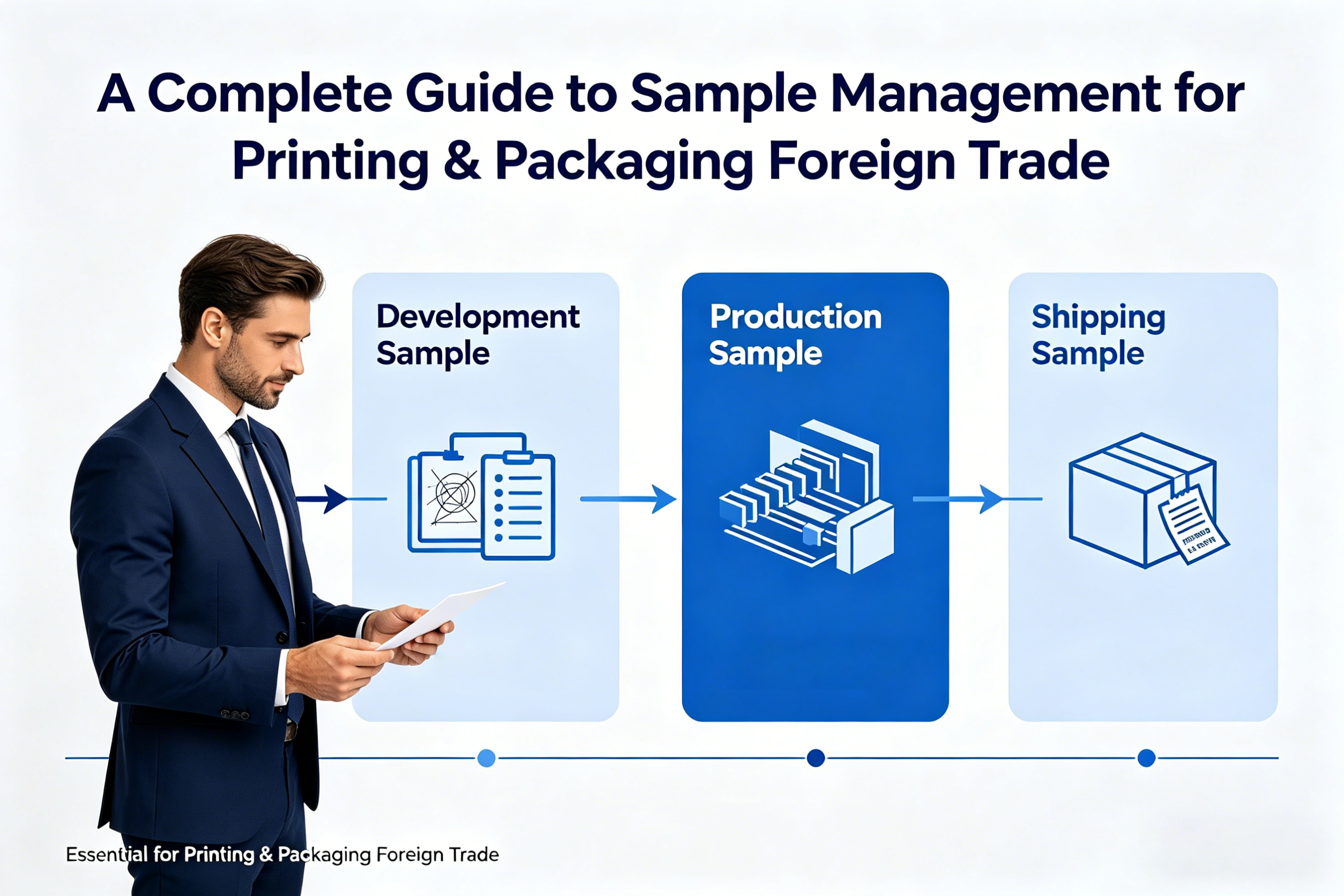
For global printing & packaging buyers, sample management is a critical link in the foreign trade sourcing process. A well-managed sample process not only helps you verify product quality, confirm design details, and avoid bulk order risks, but also builds trust with suppliers. On the contrary, chaotic sample management can lead to delayed orders, inconsistent quality between samples and bulk goods, and even disputes. Today, we’re sharing a complete guide to sample management for printing & packaging foreign trade, covering sample types, management processes, common pitfalls, and practical tips to help you streamline the process and reduce risks.
First, let’s clarify: In printing & packaging foreign trade, samples are not just “a small piece of product”—they are the basis for confirming cooperation, defining quality standards, and resolving potential disputes. Understanding the different types of samples and their uses is the first step to effective management.
Not all samples are the same. Different stages of cooperation require different types of samples, each with a clear purpose. Here are the 4 most common sample types in printing & packaging foreign trade:
This is the first sample provided by the supplier based on your design drawings or requirements. Its purpose is to verify whether the supplier can understand your design concepts, material requirements, and printing effects. Dev samples are usually not mass-produced, and minor adjustments (such as color, size, or工艺) are acceptable. You can use dev samples to confirm the overall direction and make preliminary revisions.
This is the sample produced after the dev sample is confirmed, using the same materials, printing processes, and production lines as the bulk order. It’s the final quality confirmation before mass production—once you approve the PP sample, the supplier will produce the bulk goods according to its standards. PP samples are crucial: they directly determine the quality of the bulk order, so you must check them carefully.
This is a sample randomly selected from the bulk production line during mass production. Its purpose is to verify whether the bulk goods are consistent with the approved PP sample. You can request the supplier to send prod samples during production to monitor the production quality in real time and avoid batch defects.
This is a sample taken from the final bulk goods before shipping. It’s used to confirm that the goods to be shipped meet the agreed standards, and can also be used as a reference for customs inspection or customer acceptance. It’s recommended to keep a shipping sample for future reference in case of quality disputes.
Effective sample management requires a clear process—each step has clear requirements and responsibilities, ensuring no omissions or mistakes. Here’s the step-by-step process tailored for printing & packaging foreign trade:
When sending an inquiry to the supplier, clearly state your sample requirements, including: sample type (dev/PP/prod), material specifications (e.g., 3-ply corrugated paper, FDA-certified PET), printing details (e.g., offset printing, UV coating), size, color (provide Pantone color number if possible), and delivery time for samples. Also, specify whether the sample fee and shipping fee are borne by you or the supplier—this avoids disputes later.
After receiving the dev sample from the supplier, focus on checking whether it meets your design requirements: Is the material consistent with the request? Is the printing clear and free of smudges? Is the color accurate? Is the size correct? If there are adjustments needed, list them clearly (e.g., “adjust the color to Pantone 123C”, “increase the thickness of the corrugated paper to 5mm”) and send them to the supplier for revision. Repeat this process until the dev sample meets your expectations.
Once the dev sample is confirmed, the supplier will produce the PP sample. When receiving the PP sample, check it more strictly: compare it with the dev sample and your requirements one by one, including material, printing, surface treatment, size, and color. If it’s qualified, sign a sample confirmation document (can be electronic) and send it to the supplier—this document will be the basis for determining the quality of the bulk order. If there are minor defects, request the supplier to re-produce the PP sample until it’s approved.
During the bulk production process, actively request the supplier to send prod samples. Check whether the prod samples are consistent with the approved PP sample—pay attention to details such as printing clarity, color consistency, and material quality. If you find any inconsistencies, ask the supplier to stop production immediately, investigate the reason, and make corrections. This step can effectively avoid batch quality problems.
Before the goods are shipped, ask the supplier to send shipping samples. Check them again to ensure they meet the agreed standards. At the same time, keep all samples (dev, PP, prod, shipping) and related confirmation documents—these are important evidence to resolve quality disputes if the bulk goods have problems after arrival.
Even with a clear process, many buyers still make mistakes in sample management, leading to unnecessary losses. Here are the 3 most common pitfalls and their solutions:
Many buyers only provide simple design drawings without clarifying details such as material thickness, color standards, or surface treatments. As a result, the sample provided by the supplier is not what they want, leading to repeated revisions and delayed time. Solution: Provide detailed requirements in writing, including material specifications, color numbers, process parameters, and even reference samples if possible. Avoid verbal descriptions—put all requirements in the inquiry or contract.
Some buyers approve the sample verbally (e.g., via WeChat or email) without signing a formal confirmation document. If the bulk goods are inconsistent with the sample later, the supplier may deny the agreement, leading to disputes. Solution: Always sign a sample confirmation document after approving the PP sample, clearly stating that the bulk goods must be consistent with the approved sample. This document has legal effect and can protect your rights.
Many buyers discard samples after approval, or fail to keep records of sample revisions. When there is a quality dispute with the bulk goods, they have no evidence to prove the agreed standards. Solution: Keep all samples (label them with sample type, date, and supplier information) and related communication records (inquiry, revision requirements, confirmation documents). This can help you resolve disputes quickly and protect your interests.
A reliable printing & packaging supplier will have a complete sample management process, actively provide sample progress updates, and cooperate with your revision requirements. Avoid suppliers who are perfunctory about samples—they are likely to have problems in bulk production.
Allow sufficient time for sample production and revision (e.g., 3-5 days for dev samples, 5-7 days for PP samples). Rushing the supplier may lead to shoddy samples and affect the quality of the bulk order.
If you have any questions or revisions about the sample, communicate with the supplier in a timely manner. Use clear language and pictures to describe the problems, avoiding misunderstandings.
Sample management is the key to successful printing & packaging foreign trade. By following this guide, you can streamline the sample process, avoid risks, and ensure that the bulk order meets your quality requirements. Remember: a good sample process is the foundation of a smooth cooperation with suppliers.
We have a standardized sample management process to ensure that every sample meets your requirements. From dev sample to shipping sample, we will provide timely updates and professional suggestions, helping you save time and reduce risks. Contact us today to learn more about our sample service and get a free dev sample!
#printingpackagingforeigntrade #samplemanagementprintingpackaging #printingpackagingsample #globalprintingpackagingsupplier #exportprintingpackaging
Tel:+86 13723475723
Add:building 10, zone 14th, taoyuanju, xixiang street, Bao'an district, Shenzhen, 518126, China
Connect us by scan whatsApp

CUSTOM PACKAGING SUPPLIER FOR COSMETIC, GIFT, FOOD AND SHIPPING | 2026 COPYRIGHT BY GERUN PACKAGING