
No products in the cart.
Bring Premium Value to Your Brand with a Trusted Custom Packaging Manufacturer
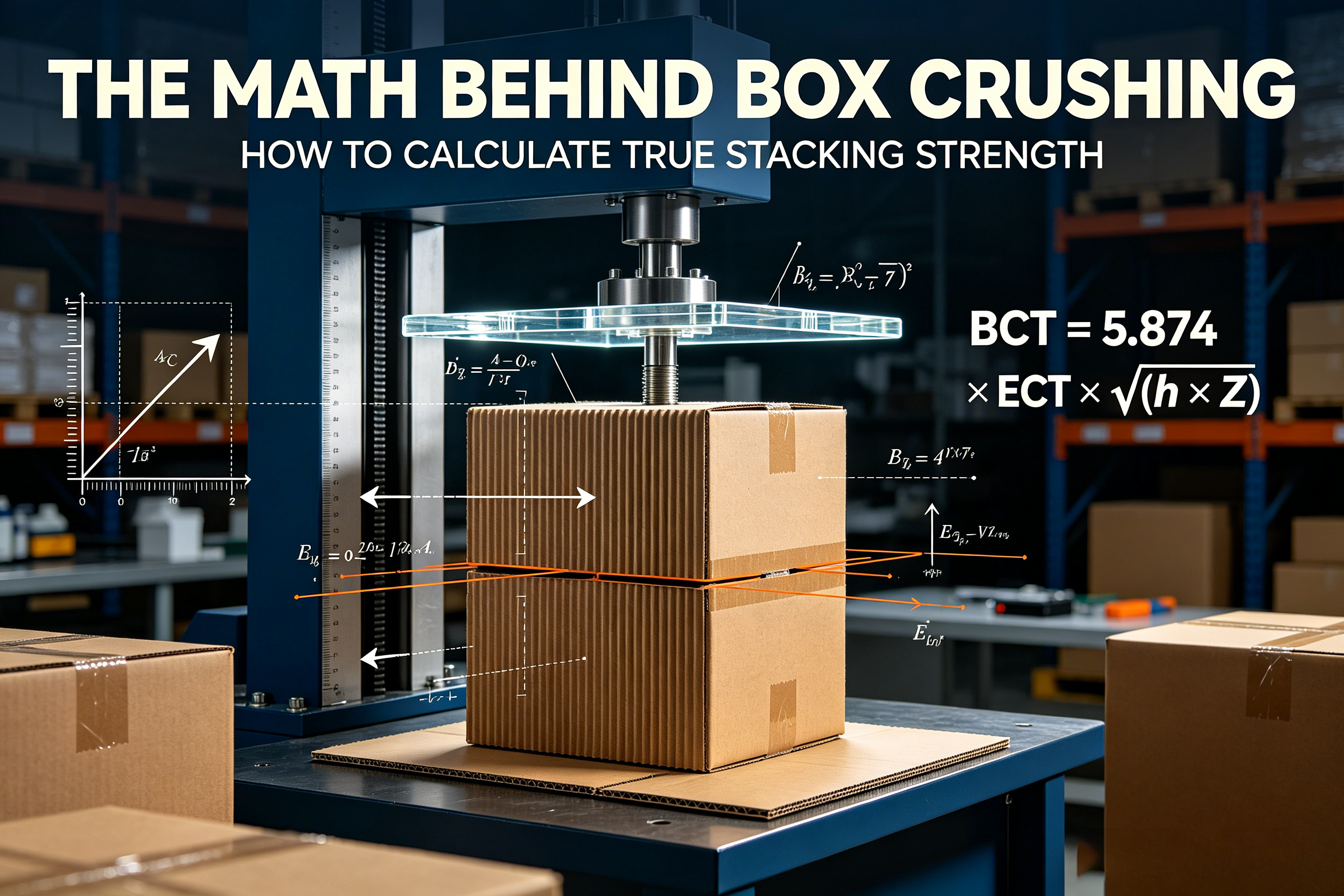
When you place a large production order for retail or e-commerce boxes, it is easy to focus entirely on visual elements like shiny foils, crisp graphics, and brand logos. However, a beautiful box means absolutely nothing if it collapses under its own weight inside an overseas fulfillment warehouse.
Every single week, global brands lose tens of thousands of dollars because their bulk pallets lean, buckle, and crush the bottom rows of products. When these disasters happen, untrained sales agents usually tell you to just buy a thicker, more expensive paper board.
But guess what? Adding random materials without a plan wastes your money and often fails to solve the real structural problem. Securing a strong supply chain requires physics, not guesswork. Let’s look at the actual engineering math that a world-class cardboard box manufacturer uses to keep your shipments safe and upright.
First of all, we must separate two very different concepts: material strength and structural strength. You can buy the most premium, high-density paper board on the market, but if the box layout, scores, or dimensions are poorly engineered, the final unit will still buckle under pressure.
To measure actual structural strength, engineers rely on the Box Compression Test (BCT). This industrial test places a fully assembled, empty box between two massive parallel metal plates. The machine slowly applies top-down hydraulic pressure until the vertical corners of the paper structure bend or crack.
[Top Hydraulic Plate] —> Applies Constant Downward Pressure (Newtons/kg)
[======]
| 📦 | —> Empty Custom Test Box
[======]
[Bottom Static Plate] —> Measures Exact Peak Load Value Before Buckling
The exact point where the structure fails gives us the maximum load value. This number tells us exactly how much weight your box can handle before it collapses.
Waiting until mass production is finished to test your box strength is a huge mistake. A highly professional custom packaging box supplier uses a famous predictive mathematical equation known as the McKee Formula. This formula allows engineers to calculate the target BCT value during the initial design phase:
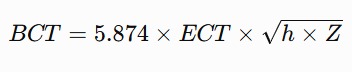
Let’s break down these technical variables into simple terms:
ECT (Edge Crush Test): This measures the horizontal crushing resistance of the corrugated fluting material itself.
h: This represents the exact thickness of the combined corrugated board.
Z: This is the overall perimeter of the box opening, calculated as $2 \times (\text{Length} + \text{Width})$.
Look closely at how this math works. The formula proves that a box’s height does not actually dictate its structural compression limits. Instead, the strength lives almost entirely within the perimeter ($Z$) and the vertical corners.
By adjusting the inner fluting profiles or slightly changing the length-to-width ratio, an expert packaging designer can dramatically increase a box’s stacking limits without adding a single cent to the raw material costs.
Now, let’s connect this lab data to a real warehouse environment. If your packed retail box weighs 5 kg, and you plan to stack them 10 layers high on a shipping pallet, you might think the bottom box only needs to hold 45 kg of pressure 5 kg X 9 boxes).
Unfortunately, that simple math will cause a total warehouse collapse. In the real world, packaging has to survive complex physical stresses like truck vibrations, rough forklift handling, forklift braking forces, and high ambient humidity. Because of these factors, engineers multiply the dead weight by a dedicated Safety Factor:
3.0
4.0
5.0 or higher
Going back to our example, if the bottom box holds a dead load of 45 kg, an international ocean shipment requires a target BCT value of at least 180 kg (45 kg X 4.0). If your current printing vendor does not run these calculations, you are essentially gambling with your inventory safety.
If your project requires high stacking durability for heavy products, you can optimize your wholesale boxes packaging using a few clever structural design adjustments:
Optimize the Inner Fluting Profiles: Corrugated boards use different flute heights (such as A, B, C, E, or F flutes). For instance, “C-flute” has excellent vertical stacking strength because it is taller. “B-flute,” on the other hand, provides better puncture resistance for smaller retail items. For heavy global freight, blending them into a double-wall structure (BC-flute) creates an incredibly tough shield.
Ensure Flute Direction Runs Vertically: This sounds incredibly basic, but cheap or rushed factories often rotate the cutting layout to fit more boxes onto a single sheet of paper. If the inner wavy flutes run horizontally instead of vertically, the box loses over 60% of its compression resistance, leading to instant buckling.
Upgrade to Multi-Point Automatic Gluing: Hand-glued seams often have uneven adhesive gaps. When pressure hits the box, those weak spots split open instantly. Choosing automated manufacturing ensures the joint seams are perfectly uniform and strong, maximizing structural integrity.
When you purchase custom boxes, you need to know exactly how much weight your packaging can carry. Balancing design aesthetics with physical durability is exactly what separates average vendors from world-class manufacturing partners.
Gerun Packaging operates as a modern, high-tech cardboard box manufacturer based in Shenzhen, China. We do not just run beautiful custom printing and packaging machinery; we run a fully equipped structural engineering laboratory to protect your international business.
Advanced Lab Validation: Our facility features heavy-duty hydraulic BCT compression testers and digital ECT crush meters to verify every batch of raw paper before mass assembly.
Custom McKee Optimization: Our in-house structural engineers map out your exact product weights, pallet configurations, and destination logistics to design the most cost-effective, high-strength box layouts.
Zero-Defect Automated Assembly: With our computerized high-speed folder-gluers, we guarantee that every corner seam is perfectly bonded for maximum structural load safety.
Don’t let weak packaging crush your retail profits. Contact the team at Gerun Packaging today to get a comprehensive engineering review, optimize your box structures, and secure your global supply chain!
Tel:+86 13723475723
Add:building 10, zone 14th, taoyuanju, xixiang street, Bao'an district, Shenzhen, 518126, China
Connect us by scan whatsApp

CUSTOM PACKAGING SUPPLIER FOR COSMETIC, GIFT, FOOD AND SHIPPING | 2026 COPYRIGHT BY GERUN PACKAGING