
No products in the cart.
Bring Premium Value to Your Brand with a Trusted Custom Packaging Manufacturer
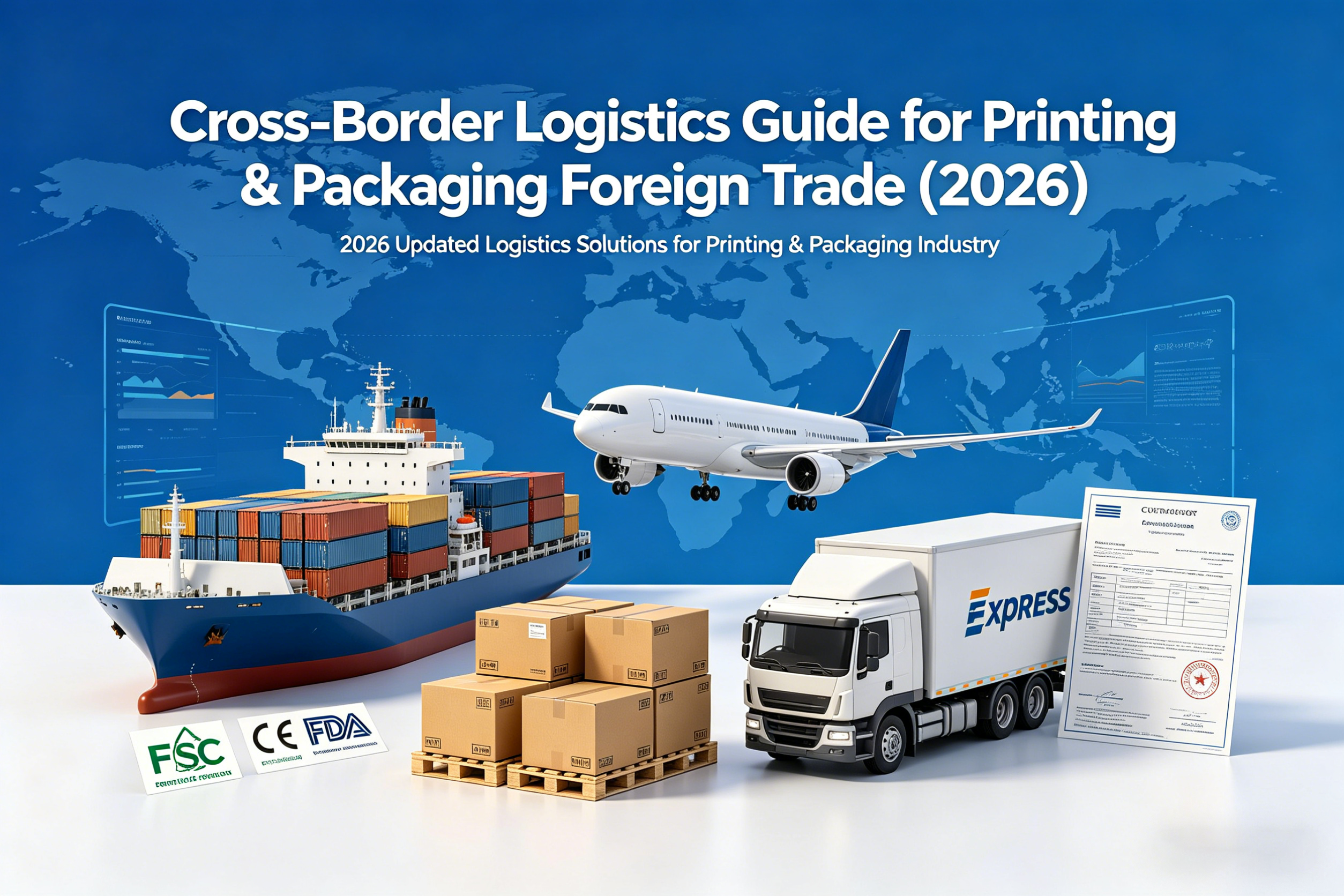
Cross-border logistics is a critical part of printing & packaging foreign trade. However, it is often one of the most challenging parts for global buyers. From choosing the right shipping method to dealing with customs clearance, a single mistake can lead to delayed deliveries, lost goods, or unexpected extra costs. Today, Gerun Packaging shares a complete cross-border logistics guide for printing & packaging foreign trade in 2026. This guide will help you ship your goods smoothly and cost-effectively.
First, let’s understand the key factors that affect cross-border logistics for printing & packaging. Product type, order quantity, target market, and budget all play huge roles. Based on these factors, you can choose the right shipping method and avoid common logistics pitfalls. Let’s dive in.
There are three main shipping methods for printing & packaging foreign trade: sea freight, air freight, and express delivery. Each has its pros and cons. Therefore, you should always choose the one that fits your exact needs.
Sea freight is the most popular choice for large printing & packaging orders. If you plan to order wholesale gift boxes bulk or heavy custom corrugated mailers, sea freight is definitely your best budget choice.
Pros: Extremely low cost per unit. It can handle large quantities and heavy goods easily. Ideal for long-term planning.
Cons: Slow delivery time (2-6 weeks, depending on the destination). It requires more paperwork and customs declaration.
Best for: Large orders (MOQ 5,000+), non-urgent orders, and durable paper-based packaging.
Air freight is a good choice for small, urgent orders. For instance, if your brand is launching a new seasonal product, this method saves time.
Pros: Fast delivery time (3-7 days). It creates less risk of damage because airports have stricter handling standards.
Cons: High cost per unit. It is much more expensive than sea freight and cannot handle very large or heavy orders.
Best for: Small to medium orders (100-5,000 units), urgent restocks, and fragile packaging like delicate cosmetic boxes.
Express delivery (such as DHL, FedEx, and UPS) is ideal for very small orders or initial product samples.
Pros: Extremely fast (1-3 days), direct door-to-door service, and simplified customs clearance.
Cons: Very expensive. Therefore, it is only feasible for small quantities.
Best for: Prototype samples and small trial orders (100 units or less).
No matter which shipping method you choose, these practical tips will help you avoid common logistics pitfalls and secure your supply chain:
Customs clearance is the biggest cause of logistics delays worldwide. To avoid this, you must work with a reliable custom packaging manufacturer to ensure all paperwork is 100% accurate.
Commercial Invoice: Clearly details the order, including product name, quantity, price, and country of origin.
Bill of Lading / Air Waybill: Serves as official proof of shipping and ownership.
Compliance Certificates: Today, global customs strictly inspect sustainability standards. If you import eco-friendly packaging options (like FSC-certified paper bags), you must attach the relevant certificates to avoid port penalties.
Printing & packaging products are often vulnerable to moisture and heavy pressure. Proper export packaging prevents damage during long ocean or air transits:
Always use sturdy wooden or plastic pallets for bulk orders, and wrap them tightly with protective stretch film to block moisture.
Add adequate corner protectors and thick foam padding inside the boxes, especially for high-end luxury rigid boxes.
Clearly label the outer cartons with signs like “Fragile” or “Handle with Care.”
A good freight forwarder makes a massive difference. We highly recommend choosing a logistics provider that understands the printing industry. Because paper boxes are often bulky, experienced forwarders know how to optimize container space. Consequently, this saves you real money on dimensional weight charges.
Customs duties and taxes vary by country and product material. Before placing an order, check the specific HS Code duty rate on your local customs website. Furthermore, you must clarify your trade terms (such as FOB, CIF, or DDP) in the contract so that you can control every penny of your budget.
Even with perfect planning, international shipping can sometimes throw a curveball. When unexpected issues arise, staying calm and taking the right action is vital:
Contact your logistics provider immediately to track the root cause, whether it is port congestion or customs inspection. Then, update your downstream customers early to maintain brand trust.
Inspect the outer cartons before signing the delivery receipt. If you find damage, take photos and videos immediately as proof, note it on the waybill, and file a claim with the carrier.
If the shipping company confirms a lost shipment, start the insurance claim process right away. A supportive manufacturer will usually open a green channel to replicate your order quickly and minimize your market loss.
Cross-border logistics does not have to be stressful. By selecting the right shipping method, preparing clean paperwork, and partnering with the right team, you can make the entire process incredibly smooth.
As a leading custom packaging manufacturer, Gerun Packaging does more than just produce premium wholesale gift boxes bulk and sustainable eco-friendly packaging options. We also provide comprehensive, one-stop international logistics support. We partner with top-tier global shipping lines and express networks to secure competitive freight rates and handle complex customs documents for you.
Let us handle the packaging, and let us simplify your logistics. Contact our expert team today to get your custom packaging design and stress-free shipping quote!
Tel:+86 13723475723
Add:building 10, zone 14th, taoyuanju, xixiang street, Bao'an district, Shenzhen, 518126, China
Connect us by scan whatsApp

CUSTOM PACKAGING SUPPLIER FOR COSMETIC, GIFT, FOOD AND SHIPPING | 2026 COPYRIGHT BY GERUN PACKAGING